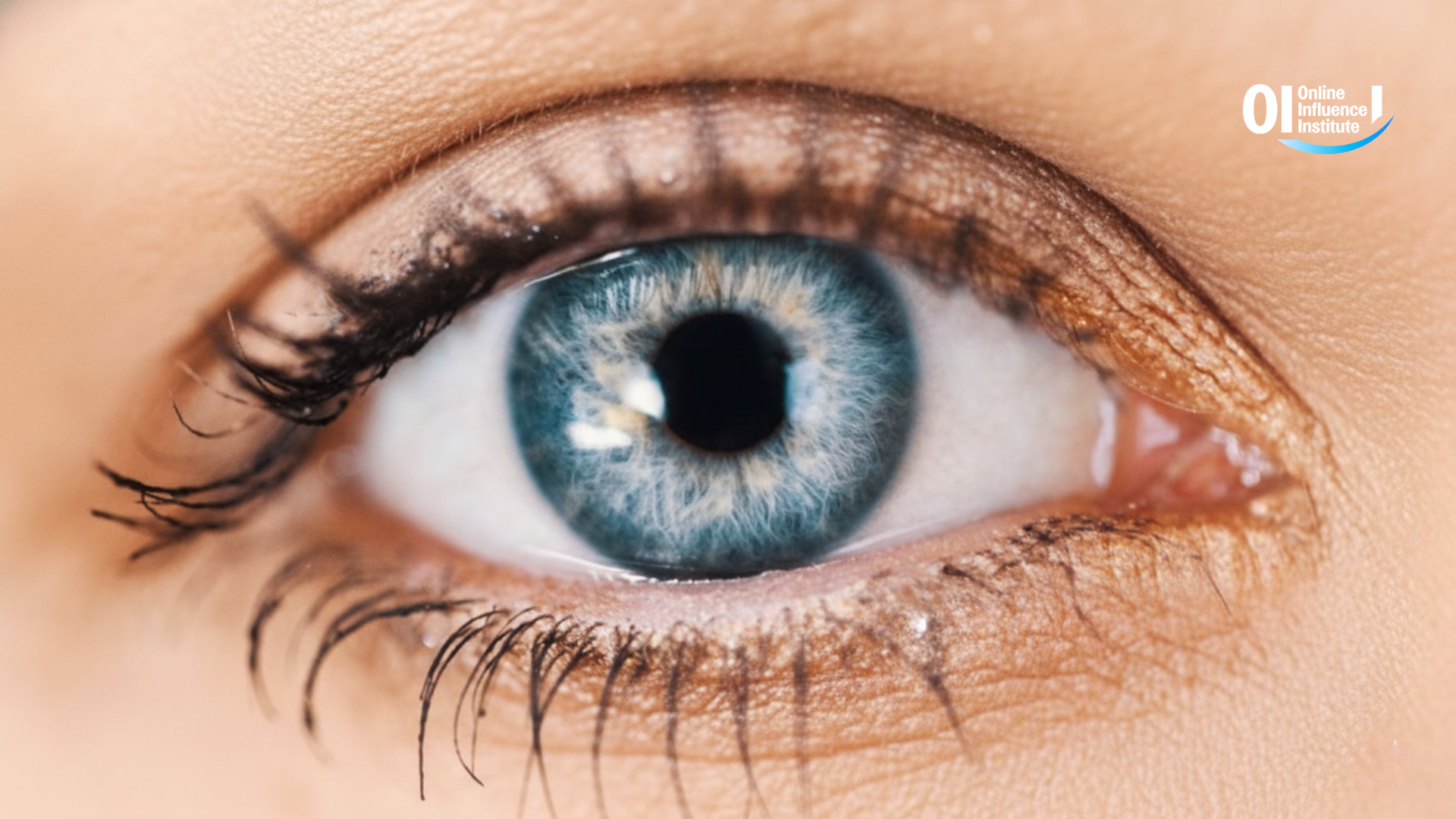
Your visitor’s eyes tell the story.
A new Frontiers in Psychology study (Sun & Jiang, 2025) found that the way users’ eyes move across a page directly mirrors how they feel — whether your design gives them pleasure, confusion, or control.

What eye-tracking reveals about emotion in design
Pleasure
Longer, steady fixations → The interface feels fluent and rewarding.
Arousal
Rapid jumps, many fixations → Cognitive load and stress rise.
Dominance
Smooth gaze, fewer saccades → The user feels in control and confident.
Calm eyes = confident users = higher conversions.

Why Ease Always Wins
In Online Influence, this principle is known as Cognitive Load — or what we call at the Institute, the Cognitive Load Loop:
“The more the brain has to process, the less it decides.”
Good design lowers mental effort, steadies the eye, and reinforces a sense of control.
That emotional ease — more than visual simplicity — is what truly drives clicks, confidence, and conversion.

⚙️ Apply it now
Use these three behavioural techniques to create interfaces the eyes (and brain) love:
1. Jenga Technique – Remove Friction
Strip away one element at a time until clarity breaks — then stop.
Each unnecessary element you remove reduces friction, mental effort and visual noise, helping users stay calm and focused.
2. Simple Question – Test Clarity
Ask five people unfamiliar with your page: “What should I do here?”
If they hesitate longer than five seconds, your design demands too much thinking.
3. Curiosity Framing – Guide Attention
Replace static headers with short, curiosity-driven cues that smoothly pull the eye to the next step.
Curiosity creates a natural information gap that narrows focus and keeps attention where it matters most.
These same techniques are also trained into our AI Agents inside the Online Influence AI Lab — ready to analyse any page for emotional friction and flow.
Takeaway
When your design feels easy, the eyes move slower, steadier, and more confidently.
That’s not just good UX — it’s behavioural science in motion.
👉 Design for calm eyes, and you’ll get decisive clicks.
*📘 Source
Sun N. & Jiang Y. (2025). Eye movements and user emotional experience: a study in interface design. Frontiers in Psychology 16:1455177.
Click here for the full study.
NB: Curious about Human Psychology + AI?
Join our free workshop at www.onlineinfluence.com